
“There are young people who get beaten for defending what science says”: Guya Accornero on CNN Portugal
Interview with CNN Portugal, 31 October 2026
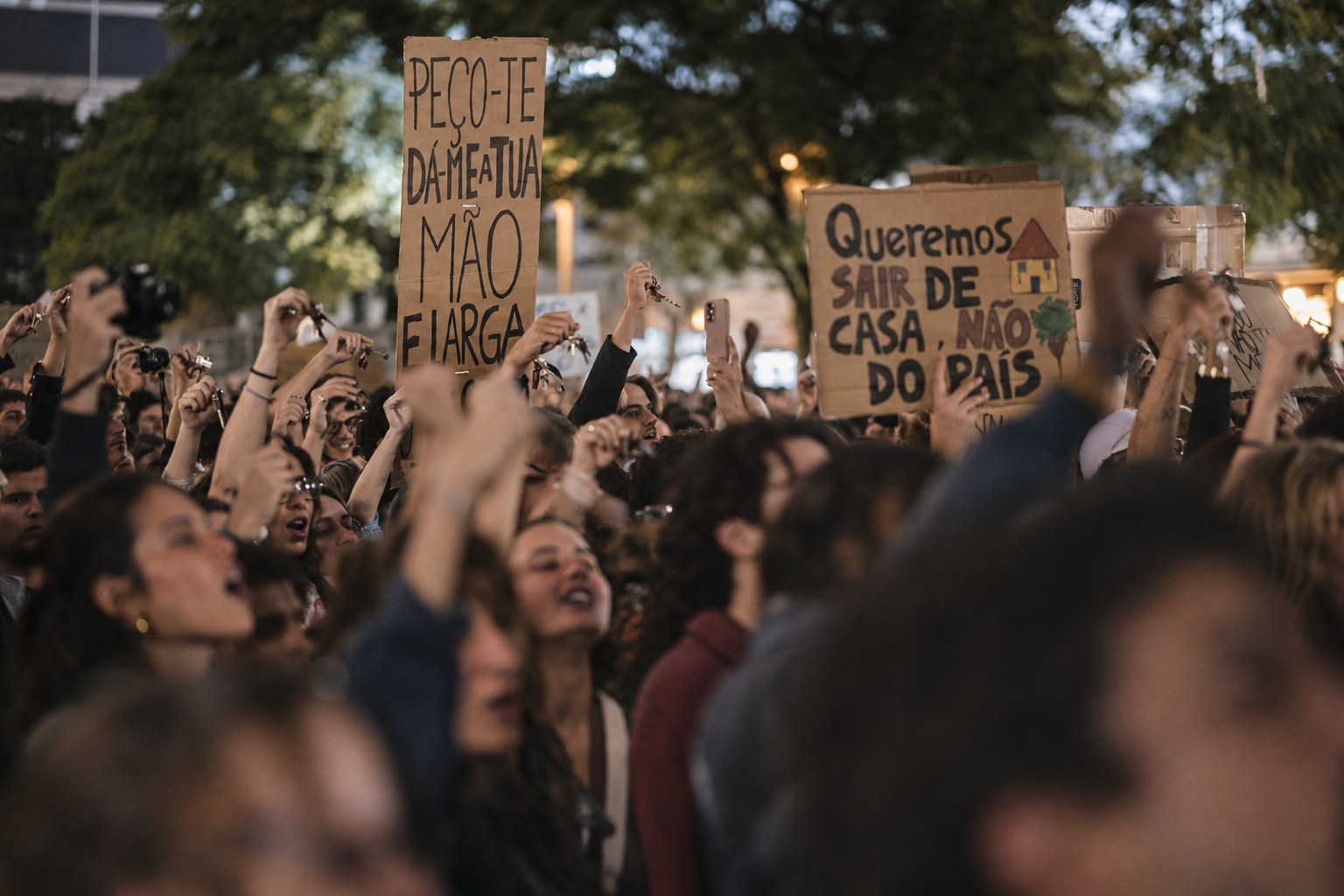
In an interview with CNN Portugal, Guya Accornero, director of the Observatory of Democracy and Political Representation, starts from the housing encampments in Lisbon and Porto to reflect on what social movements can change and what happens when their demands are deemed impossible.
The interview dismantles the myth of spontaneity. The encampments did not come out of nowhere. They mark the return to visibility of a movement that has been consolidating in recent years, sustained by organisations that keep working when media attention fades, supporting, among other things, people who have been evicted.
Mobilising takes experience, networks and know-how, and that work is rarely seen. For the same reason, it questions the expectation that movements be “inorganic”, a journalistic label that is not used in academic studies.
The interview also traces the continuities with the anti-austerity protests, from the Rossio and Puerta del Sol encampments to Geração à Rasca, and points to the key difference: housing, which became central after 2015 with touristification and the effects of the revisions to the rental law.
Guya Accornero also discusses the diversity of those mobilising today, from students to middle-class families and people facing eviction, and the relationship between movements, parties and unions, which she considers more complex than the idea of mere co-optation.
On demands seen as utopian, she notes that many of the social movements’ proposals are grounded in the findings of scientific research. Moreover, rights now enshrined, such as the right to strike, also once seemed impossible. She discusses how hard it is to measure the success of a protest and the ways movements can reach institutions, from Podemos and the German Greens to the recent case of Serbia, where student protests won the elections.
Police repression of the encampments takes up an important part of the conversation. Guya Accornero explains that violence can end up generating new solidarities and strengthening collective identities, and recalls her own experience in Genoa in 2001, in the global justice movement. In her view, the protesters managed to denounce what happened without losing focus on their demands.
In closing, the Observatory’s director raises two concerns. The lack of a broader vision of a fairer society, beyond sectoral demands, and the violence that so many young people face across Europe when they take to the streets to defend causes such as climate or peace.
An interview worth reading in full (in Portuguese) on CNN Portugal (31 October 2026).