
One election, two results: how political communication and the political economy of communication help us understand Lula’s victory
By Livino Neto
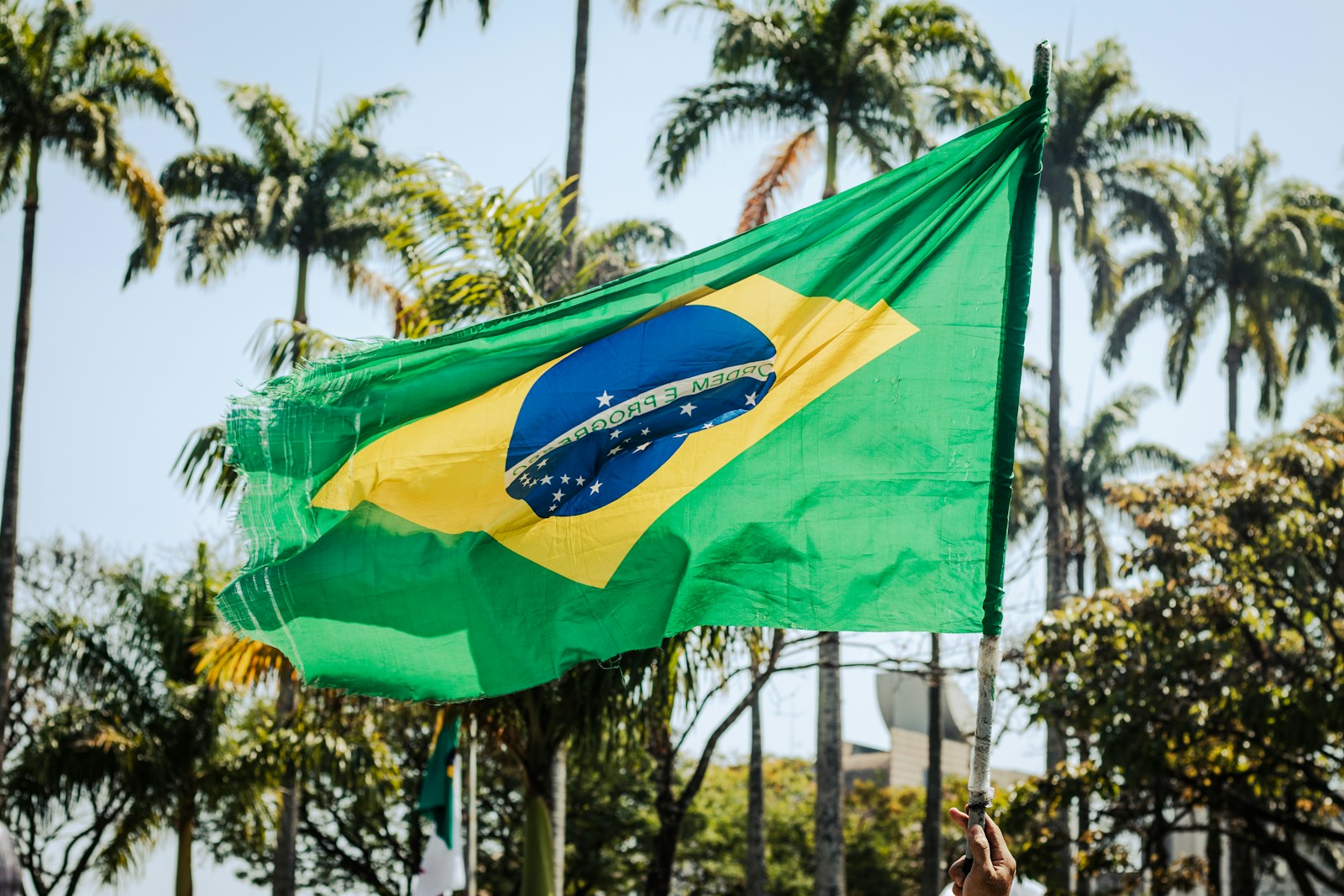
Photo: Matheus Câmara da Silva / Unsplash
Introduction
On 25 October, Luiz Inácio Lula da Silva won his fourth Brazilian presidential election, this time against Senator Flávio Bolsonaro, a far-right candidate and son of former president Jair Messias Bolsonaro. This moment opens what may be the final act in the public life of one of the most defining figures of Brazilian democracy.
Reading only the last lines of the chapter, however, does not allow us to understand the whole story. On 5 October 2026, Flávio Bolsonaro finished the first round in first place, with 47.03% of valid votes against Lula’s 45.16%, a gap of 2,224,965 votes. The PL also elected 121 federal deputies and 19 senators. Among the far-right candidates elected are young figures with a strong digital presence, relatives of the former president and close allies. As a result, from 2027 Brazil will have its most reactionary Congress since the return to democracy.
The challenge facing Lula and the progressive camp in the second round was immense. They needed to recover their morale after a devastating result in the legislative elections and to break the historical taboo that no candidate who finished the first round in second place had ever turned a Brazilian presidential election around. Lula and his allies achieved this, but before turning to that achievement, the causes of the first defeat need explaining.
The arrival of emerging issues
Before the campaign began, a considerable increase in the far-right’s group in the Senate was expected, fuelled by calls to impeach Supreme Federal Court (STF) justices. Even so, given largely positive macroeconomic data and his opponent’s own vulnerabilities, President Lula’s re-election seemed the most likely scenario.
On the eve of the election, as Flávio Bolsonaro was consolidating his position as the conservative camp’s candidate, anointed by his father, a report by The Intercept Brasil revealed the candidate’s links to banker Daniel Vorcaro, who is under investigation for crimes against the financial system. The outlet released recordings in which the candidate sought very large sums of funding for the film project Dark Horse (a biopic loosely based on Jair Bolsonaro’s 2018 election victory, with an initial budget of R$134 million), prompting investigations into how the money may have been used.
Although the government needed to consolidate the perception of economic improvement (with a buoyant labour market, falling poverty and inflation under control), the emergence of an external issue destabilised the picture. When a candidate is not favoured by the state of the economy, they need to run an insurgent campaign, driven by other issues in public debate. The opportunity for Flávio Bolsonaro to benefit from this strategy came from the judiciary.
First, news outlets began publishing information about investigations involving Fábio Luís (known as Lulinha) and the purchase of medicines by public bodies, even though there was no government contract to buy those medicines, raising suspicions of selective leaks. Then public disagreements between STF justices fed the court’s institutional erosion, culminating in Justice André Mendonça’s accusation about an alleged relationship between Justice Alexandre de Moraes and banker Daniel Vorcaro.
If news is turned into a commodity by the major outlets, converting the value of information into exchange value through the fragmentation of reality and the personalisation of social processes, the media ended up flattening complex issues under the banner of “cleaning up the institutions”. Through a process of deep mediatisation across multiple platforms, this narrative came to be read by the public as a crusade against the system. It is no surprise, then, that actors aligned with the push to impeach STF justices and with an “against everything out there” discourse were boosted, while candidacies identified with “the system”, including President Lula’s own, were penalised.
Of course, the emergence of these issues was not the only reason for the progressive camp’s defeat in the first round. Lula’s campaign at that stage was practically analogue, heavily dependent on local political platforms and erratic in its communication strategy. It focused above all on celebrating the president’s historical legacy, neglecting the need to present voters with “the Brazil of tomorrow”, almost as if the election were Lula’s farewell tour.
The second round and the progressive comeback
Much has already been said about how the first-round result disoriented the inner circle of Lula’s campaign, in an endless search for those responsible for the disappointing outcome. Meanwhile, the same circumstances hardened the belief within Flávio Bolsonaro’s campaign that the situation was irreversible, three weeks before the run-off.
Two factors are key to understanding the turnaround in the mood and in the result: the autonomous action of social movements (above all youth movements), which occupied and connected the streets and social networks to halt the advance of Bolsonarism; and the entry of left-wing actors with a strong digital presence, who came together to form a “Lulista Digital Party” as a counterweight to the “Bolsonarista Digital Party”.
The synergy between youth collectives, trade unions, politician-influencers and public figures created an ecology of action able to stage mass rallies in the very first hours of the second round, such as the mobilisation of students at the Fluminense Federal University or the people’s assemblies in Fortaleza, even without prior guidance or campaign material. In none of these cases did the central committee exercise tight control: Lula’s candidacy acted as an attractor and a point of convergence for action, getting ahead of the official call to mobilise.
The aim here is not to build the myth that the horizontality of the streets, on its own, re-elected President Lula, but to recognise that decentralised action was decisive in responding to the shock of the first round. This movement restored the campaign’s emotional charge through symbolic and organisational mediation on social media, guiding physical presence in public space and feeding the digital environment with images of hope.
At the same time, the creation of the WhatsApp channel Exército do Lula (“Lula’s Army”) by federal deputy André Janones, which reached more than 10 million followers, provided the digital infrastructure needed for the emergence of what is conceptualised here as the Lulista Digital Party, formulated as a counterweight to the Bolsonarista Digital Party. The platform enabled increasingly coordinated organised political action, whose dynamics unfolded in the digital sphere.
As with the Bolsonarista digital intervention, this is a conscious and coordinated strategy of political action. It represents an organised effort aimed at acquiring social power, generating a permanent dynamic of digital activity that structures the relationship between leadership and base and turns a fragmented audience into a unified collective around a cohesive identity-based agenda, producing collective organisation and social choice. The Digital Party thus not only allowed the left to intervene in an ecosystem previously dominated by Bolsonarism, but was also decisive in getting around the algorithmic bias of Meta’s platforms in favour of its opponent.
Neither Meta nor the large corporate media are neutral
Once the Brazilian judiciary had been “normalised” and was no longer the central issue of the campaign, the socio-economic programmes (or lack of them) of the two candidates in the run-off began to be discussed. At the same time, the candidates’ past actions came under greater scrutiny.
While Flávio Bolsonaro showed ease in front of the cameras, both in televised interviews and in debates, his political performance sounded neither original nor authentic like his father’s. In the first debate, he came across as a high-school bully, emulating Donald Trump’s confrontation with Hillary Clinton by standing behind his opponent and pulling faces every time Lula spoke. When the tactic backfired and turned the public against him, Flávio tried, in the next and more widely watched debate, to soften his discourse.
This attitude nevertheless rang false and did not survive the candidate’s true personality: he called his opponent “nine fingers”, a Bolsonarista jibe. Lula turned the provocation to his advantage in his reply: “I will not allow a militiaman to call me nine fingers. He has never worked a day in his life, he doesn’t know what a work permit is. He will have to apologise,” the president responded, explaining that he lost a finger on his left hand at the age of 17 in an accident while working an irregular night shift as a metalworker. He concluded: “Millions of workers suffer accidents because of employers’ irresponsibility.”
If the radical-right candidate failed to show transparency, the same can be said of Meta during the election. The US company allegedly favoured Flávio Bolsonaro’s candidacy, above all by restricting Lula’s ads and disproportionately and automatically boosting posts by right-wing candidates. Journalist Patrícia Campos Mello, of Folha de São Paulo, reported on internal messages between Meta staff and engineers in which they admitted that technical restrictions in the algorithms and moderation systems had ended up harming Lula’s accounts.
The role of big tech in elections clearly deserves a text of its own, one that could draw on the contributions of the political economy of communication. Still, it is important to stress how this election shows that platformisation amounts to an imperialist relationship, in which a country’s democratic system is at the mercy of a US multinational capable of reorganising the population’s cultural practices and imaginations around its platforms. Strengthening the debate on platform regulation is therefore crucial for Brazilian democracy, if democracy is not to become subject to external interests.
Likewise, attention should be paid to the role of professional journalism and the major media during the second round. On the one hand, there was essential investigative work on the relationships between Flávio Bolsonaro, Daniel Vorcaro and Willer Tomaz, with major investigations by independent outlets detailing the process. On the other hand, the traditional weekly magazine Veja published a recording that sought to link Daniel Vorcaro to Lula, even though the Federal Police and the Prosecutor General’s Office had not recognised it as part of the banker’s plea deal or investigation. The episode raised suspicions that it had been staged, secretly recorded in prison and circulated by the magazine. CNN Brasil was no better: on the eve of the first presidential debate of the run-off, it broadcast an interview with lobbyist Roberta Luchsinger in which she tried to tie allegations to President Lula without presenting any evidence. Added to this was Flávio Bolsonaro’s “unusual” lunch with João Roberto Marinho (chairman of Grupo Globo) on the day of his televised interview on the network, with no equivalent treatment given to the left’s candidate.
While professional journalism showed vigour and urgency, the corporate press once again revealed its partiality through practices hardly befitting a republic. This reinforces both the need to recognise and value news professionals and the continuing relevance of the struggle for a broad, plural and democratic communication system.
Are there conclusions?
It is still too early to draw definitive conclusions about the full significance of Brazil’s 2026 elections. They will undoubtedly remain on the agenda for years to come, driven by contributions from many academic fields, above all the social sciences. The aim of this essay was simply to put the electoral process in context, with particular attention to the dynamics running through the field of communication.
It is equally early to measure the global impact of this result on future elections around the world. Even so, there are already signs that the Brazilian experience is acting as a source of hope in containing the far right and strengthening democratic systems worldwide. This movement took shape through new communication processes and the emergence of new political identities, curiously in the context of a candidacy led by an octogenarian politician, in his seventh presidential race and winning his fourth democratic mandate.
What happened in Brazil was a major political event, and it is precisely this scale that captivates and inspires a world that refuses to give up on democracy.
Note: This essay was produced with the support of the artificial intelligence tool Gemini (Google), used solely to help with copy-editing, adapting the content to European Portuguese and initial exploration of campaign data. All revisions and information generated or gathered by the tool were reviewed, checked and validated by the author.